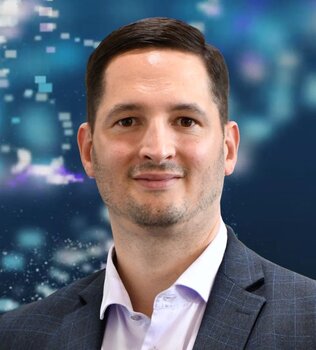
André Remy
Head of Global Group Customer Solutions & Innovation | Rhenus Group
André Remy is Head of Global Group Customer Solutions & Innovation at Rhenus Logistics. He is responsible for developing cross-functional supply chain solutions and new products at Group level.
Working with his international team, he operates at the intersection of customer needs, technology, and commercial strategy, developing vertical strategies, 4PL and Control Tower solutions, and translating emerging technologies into market-ready offerings.
In more than 16 years at Rhenus, he has driven the digitalization of logistics from multiple perspectives: building customer-facing digital platforms, holding global responsibility for customer and partner integration, and steering an IT transformation portfolio spanning TMS, WMS, master data, and BI projects. Most recently, he led the due diligence and post-merger integration of software company SETLOG AG, paving the way for Rhenus' 4PL Solutions entity.
His perspective on automation extends beyond the warehouse. To him, physical automation is necessary across the entire supply chain, including inland waterway vessels, in crane and handling operations at ports and terminals, and in yard management. However, it only delivers its full potential where it interacts with the automation of information and decision flows – from digital order processing and automated data and systems integration to visibility and Control Tower solutions.
André Remy holds a German Diploma in Logistics Engineering (Master's equivalent) from TU Dortmund and has completed the Driving Strategic Innovation programme at IMD Business School. Based in Germany's Ruhr region, he works internationally on customer and innovation projects.
LogTech Stage
Automation 2026 – A Superior Approach or an Overrated One? A Debate
In many areas of logistics, automation is considered a key driver of competitiveness, efficiency, and sustainability. This panel discussion examines whether everything will or can actually be automated by 2026, and explores the opportunities, limitations, and appropriate applications of various automation approaches. The focus is on how companies can make the right decisions for their supply chains while balancing technological progress, economic feasibility, and operational realities.