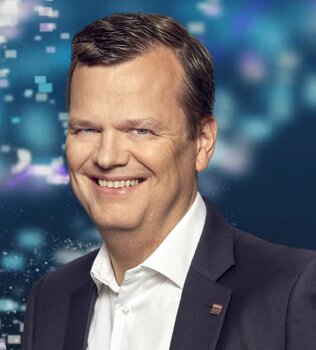
Ewald Raben
CEO | Raben Group
The winner of LEO 2018 award in the "Entrepreneur of the Year" category in Germany awarded by Deutsche Verkehrs-Zeitung, Man of the Year 2022 according to Rzeczpospolita Logistics Awards in Poland and Entrepreneur of the Year 2012 in Poland. He was born in Winterswijk in the Netherlands. He studied at the University of Transport and Logistics in Rotterdam. In 1991, he founded the Polish branch of the family business. At that time, the company employed only 12 people and had a turnover of 5 million Euros.
During over 35 years of business activity he created a European company dealing not only with road transport but also with comprehensive services including contract logistics, sea and air transport, FTL & intermodal transport and logistics of fresh products in controlled temperatures under the brand of Fresh Logistics.
Currently Raben Group has over 12 400 employees, 2 100 000 m² of warehouse space at its disposal and the global turnover of the company has exceed 2.3 billion Euro. The branches of the Group are located in 17 European countries: Austria, Bulgaria, Czechia, Estonia, Germany, Greece, Hungary, Italy, Latvia, Lithuania, the Netherlands, Poland, Romania, Slovakia, Switzerland, Turkiye, Ukraine.
Ewald Raben is not only the CEO. He knows logistics inside out, as a young boy he worked in the family business driving a truck or moving pallets. He has always been where his team is, sharing the mission, vision and values of Raben Group. The company conducts its activities in a sustainable manner, that is why Environmental, Social and Governance standards (ESG) have been an embedded part of company’s strategy and become part of its DNA. Ewald has launched many campaigns and initiatives promoting green solutions, road safety, the importance of transport and healthy lifestyle.
Main Stage
CEO-Talk
Two CEOs from leading logistics service providers will build on the content from the Transformation Dating Game on the first event day – offering an open look behind the scenes at their transformation and digitalisation programmes. They will share specific practical experiences from their companies, identify key success factors and highlight typical pitfalls in strategy, implementation and change management. This paints a realistic picture of what works today, where projects can go wrong, and which levers really make a difference.
With the kind support of