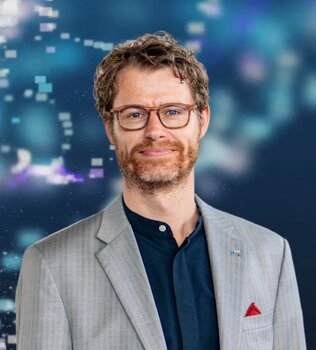
Peter Müller-Kronberg
Geschäftsführender Gesellschafter | ZUFALL logistics group
Peter Müller-Kronberg führt als CEO und Gesellschafter in dritter Generation das Familienunternehmen Friedrich Zufall, Göttingen. Er verantwortet u. a. die Zentralbereiche New Products, Strategy, Marketing & Communication und Environmental Sustainability.
Bevor der heute 42-Jährige 2013 in das Unternehmen eintrat, studierte er Eventmanagement und sammelte Erfahrungen im Sportmarketing. Er erhielt seine speditionelle Ausbildung bei Streck Transport und als Trainee bei Hellmann Worldwide Logistics.
Müller-Kronberg initiierte mit seiner Übernahme des fast 100 Jahre alten Unternehmens einen Transformationsprozess. Sein Ziel ist es, die Organisation, Strategie und Kultur des Unternehmens zukunftsfähig aufzustellen. Dazu zählen die Entwicklung und Implementierung des „Leitbilds 2028“ mit Unternehmenszweck, Vision und Handlungsprinzipien sowie die Entwicklung und Umsetzung der Unternehmensstrategie 3P - People, Planet, Profit.
2019 gründete der Unternehmer das zufall.lab in Göttingen. Die Experimentierwerkstatt arbeitet daran, die Veränderungsfähigkeit des Unternehmens und seiner Mitarbeitenden zu stärken. Das mobilisiert Innovationskräfte für neue logistische Ansätze, Prototypen und Prozesse für eine bessere und nachhaltigere Logistik von Morgen.
Peter Müller-Kronberg lebt mit seiner Frau und seinem Sohn in Göttingen. Er integriert in seinem Privatleben und in der Unternehmenskultur eine gelebte Nachhaltigkeit, die auf die Zukunft der Enkel einzahlt. Mit Zufall möchte er nach neuen Wegen suchen, die uns zu einem verantwortungsvollen Umgang mit der Natur und den Ressourcen inspirieren.
CURIOStage
Circular Economy als Geschäftsmodell: Strategische Impulse für die Logistik der Zukunft
Welche strategischen Chancen und Herausforderungen entstehen durch zirkuläre Geschäftsmodelle in der Logistik? Wie können Unternehmen ihre logistischen Abläufe anpassen, um die Anforderungen der Circular Economy zu erfüllen, ohne die Wirtschaftlichkeit zu gefährden? Das Panel behandelt, wie Circular Economy die Logistikbranche transformieren kann und welche konkreten Schritte notwendig sind, um von der Theorie in die Praxis überzugehen. Nur durch enge Zusammenarbeit der Akteure können die Potenziale einer Kreislaufwirtschaft voll ausgeschöpft werden, um Ressourceneffizienz und Nachhaltigkeit langfristig zu gewährleisten.